Candle making is both an art and a science, and one of the most important elements that determines a candle’s performance is the wick. Understanding the types of candle wicks helps ensure a clean burn, strong scent throw, and overall safety. Whether you are a beginner or an experienced candle maker, choosing the right wick is essential for achieving the best results.
In this guide, we’ll explore the different types of candle wicks, their uses, and how to choose the right one for your needs.
What Are Candle Wicks and Why Do They Matter?
A candle wick is the core component that draws melted wax up to the flame, acting as a fuel delivery system. The performance of your candle largely depends on the wick’s material, size, and structure.
Understanding how different types of candle wicks function is essential for achieving a clean and consistent burn. The structure, material, and thickness of a wick directly influence flame size, wax consumption, and overall performance. According to the National Candle Association, properly designed wicks help regulate how fuel (melted wax) is drawn up to the flame, ensuring both safety and efficiency.
When selecting from various types of candle wicks, it’s important to match the wick with the wax type, fragrance load, and container size.
Main Types of Candle Wicks
There are several types of candle wicks, each designed for specific applications. Below are the most commonly used options in candle making.
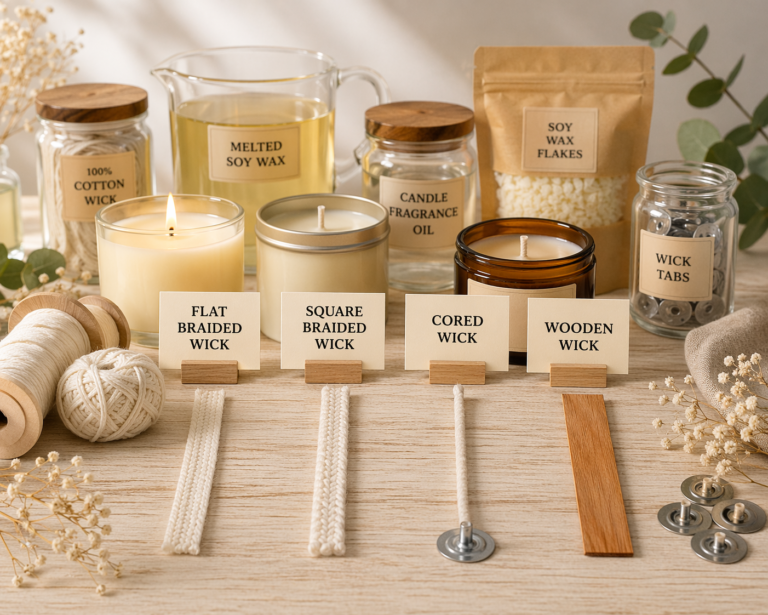
1. Flat Braided Wicks
Flat braided wicks are one of the most widely used types of candle wicks, especially for traditional candles.
Features:
- Self-trimming design
- Consistent flame
- Suitable for paraffin and soy wax
Best for:
- Taper candles
- Pillar candles
2. Square Braided Wicks
Square braided wicks are thicker and designed for more viscous waxes, making them a reliable option among different types of candle wicks.
Features:
- Stronger flame
- Better fuel flow
- Ideal for natural waxes
Best for:
- Beeswax candles
- Larger diameter candles
3. Cored Wicks
Cored wicks contain a core made of cotton, paper, or zinc, which helps them stay upright in containers.
Features:
- Rigid structure
- Easy to use
- Stable burn
Best for:
- Container candles
- Gel candles
If you’re looking for reliable options, you can explore Best Candle Wicks to find high-quality choices suited for different candle styles.
4. Wooden Wicks
Wooden wicks are becoming increasingly popular and are considered one of the more premium types of candle wicks.
Features:
- Soft crackling sound
- Unique aesthetic
- Wide flame
Best for:
- Luxury candles
- Decorative candles
5. Specialty Wicks
Specialty wicks are designed for specific purposes, such as eco-friendly candles or high-fragrance blends.
Features:
- Tailored burn performance
- Designed for unique wax blends
Best for:
- Custom or high-end candles
How to Choose the Right Candle Wick
Even with so many types of candle wicks available, selecting the right one depends on multiple factors.
Consider the Following:
- Wax Type: Soy, paraffin, or beeswax require different wick styles
- Candle Size: Larger candles need thicker wicks
- Fragrance Load: Heavily scented candles require stronger wicks
- Container Diameter: Affects melt pool and burn efficiency
If you’re getting started, using quality Candle Making Kits and Supplies can make the process easier and more reliable.
Where to Buy Candle Wicks in the USA
If you’re searching for candle wicks near me or wondering where to buy candle wicks, it’s best to choose trusted suppliers that offer consistent quality. In the USA, many online stores provide a wide range of wick types suitable for different candle-making needs.
Look for:
- Premium materials
- Multiple size options
- Compatibility with various wax types
For expert advice or bulk orders, you can Contact Jess Mae for guidance on selecting the right wick.
Common Uses of Different Candle Wicks
Understanding how different types of candle wicks are used can help improve your candle-making results.
- Flat braided wicks: Ideal for everyday candles
- Square braided wicks: Best for natural wax candles
- Cored wicks: Perfect for container candles
- Wooden wicks: Great for decorative and luxury candles
Knowing these applications allows you to choose the most suitable option from the various types of candle wicks available.
Conclusion
Selecting the right wick is essential for creating high-quality candles. With many types of candle wicks available, understanding their differences and uses can significantly improve burn quality, scent throw, and safety.
Whether you’re a hobbyist or running a candle business in the USA, choosing the correct wick ensures better performance and a superior final product.
FAQs
What are the different types of candle wicks?
There are several types of candle wicks, including flat braided, square braided, cored, wooden, and specialty wicks. Each type is designed for specific candle styles and wax types to ensure proper burning.
How do I choose the right candle wick?
Choosing the right wick depends on wax type, candle size, fragrance load, and container diameter. Testing is often necessary to achieve the best results for your specific candle.
What is the best type of wick for candles?
The best wick varies by candle type. Cotton braided wicks are versatile, while wooden wicks are preferred for aesthetic and premium candles.
What size wick should I use for my candle?
Wick size should match the diameter of your candle. Larger candles require thicker wicks to ensure an even melt pool and proper burning.
What are candle wicks made of?
Candle wicks are commonly made from cotton, wood, or paper fibers. Some also include cores like zinc or paper to improve structure and performance.