Creating your own candles at home is a rewarding and creative hobby. Whether you’re crafting candles for personal use or small-scale sales, selecting the right candle wick is one of the most important steps to ensure your candles burn evenly, safely, and beautifully. At Jess Mae, DIY candle makers can find a wide variety of high-quality candle wicks suitable for different candle types and waxes. This guide will walk you through essential candle wick selection tips to elevate your DIY candle-making projects.
Why Candle Wicks Matter
Candle wicks are more than just a string that burns. They play a critical role in controlling the burn rate, flame size, and overall performance of your candle. Choosing the wrong wick can lead to problems like uneven burning, tunneling, excessive smoke, or weak scent throw. Using the right wick from Jess Mae’s selection ensures that your candle not only looks professional but also performs well.
1. Understand Different Wick Types
Jess Mae offers a variety of candle wicks, each designed for specific candle-making needs:
- CD Candle Wicks – Versatile wicks that work well with multiple wax types. Ideal for container candles and beginner projects.
- ECO Candle Wicks – Eco-friendly options, perfect for soy wax and environmentally conscious makers.
- HTP Candle Wicks – High-temperature performance wicks suitable for larger candles and wax blends that require stronger heat tolerance.
- LX Candle Wicks – Premium wicks designed for luxury candles, delivering steady flames and strong scent throw.
- Zinc-Core Candle Wicks – Wicks with a zinc core for stability in pillar candles or larger diameter containers.
Knowing the wick types available allows you to select the one that fits your candle size, wax type, and burning goals.
2. Match Wick Size to Candle Diameter
One of the most common mistakes in DIY candle making is using a wick that is too small or too large for the candle container. Jess Mae provides wicks in various sizes to accommodate different candle diameters. A wick that’s too small will produce a weak flame, while a wick that’s too large may create a high flame and soot. Always check the recommended size chart provided on the Jess Mae candle wick product page to ensure the wick suits your container.
3. Consider Wax Type
Different waxes burn differently, and the wick must match the wax you’re using. For instance:
- Soy wax – Often requires eco-friendly or CD wicks for an even, slow burn.
- Paraffin wax – Works well with LX or HTP wicks due to its higher melt point.
- Beeswax or blended waxes – May benefit from a zinc-core or HTP wick to maintain flame stability.
Jess Mae’s range provides options for all common wax types, making it easy to select the right wick for your DIY project.
4. Test Burn Your Wick
Even with the perfect wick size and type, every candle can behave differently. Always perform a test burn with Jess Mae wicks before making large batches. Observe:
- Flame height and stability
- Scent throw
- Wax pool formation
- Smoke or soot
Adjust wick size if needed. Testing helps prevent common problems like tunneling or uneven burns.
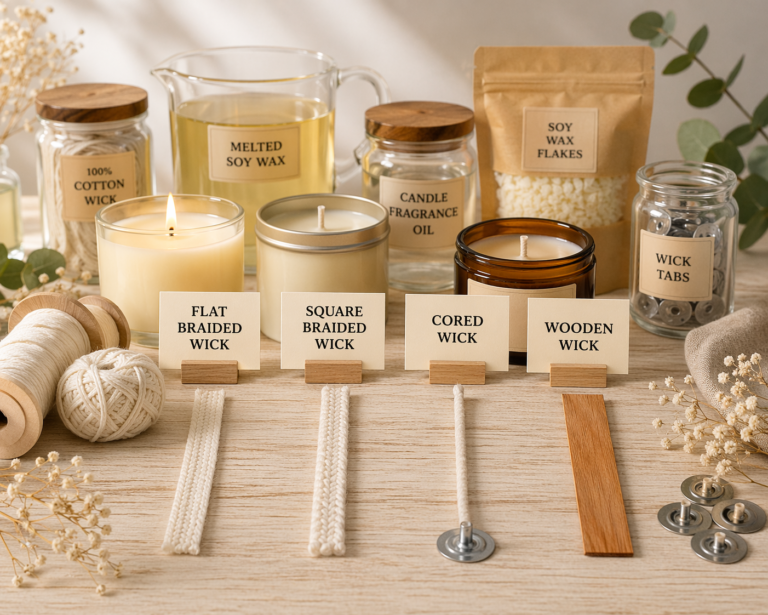
5. Pay Attention to Wick Material
Candle wick materials can affect the candle’s performance:
- Cotton-core wicks – Provide clean, steady flames; ideal for container candles.
- Wooden wicks – Create a unique crackling sound and visually appealing flame; perfect for decorative candles.
- Zinc-core wicks – Offer extra rigidity for pillars or larger candles.
All Jess Mae wicks are designed with high-quality materials, ensuring reliable burning for any candle type.
6. Safety First
Proper wick selection is not only about performance but also safety. Using the wrong wick can cause excessive heat or uneven burns, which may lead to hazards. Jess Mae provides clear specifications for each wick type, making it easier for DIY candle makers to maintain a safe and enjoyable candle-making process.
7. Keep Wick Maintenance in Mind
Even after selecting the right wick, proper wick maintenance is crucial:
- Trim your wick to about ¼ inch before lighting.
- Keep the wick centered to ensure an even wax pool.
- Remove debris from the wax surface to prevent flaring.
Following these tips enhances the lifespan of Jess Mae candle wicks and ensures a clean, consistent burn.
8. Choose the Right Wick for Fragrance Throw
For scented candles, wick selection is critical. A wick that’s too small may not generate enough heat to release fragrance, while a wick that’s too large may burn the wax too quickly. Jess Mae’s range, including HTP and LX wicks, is designed to optimize both the flame and fragrance performance, giving your DIY candles a professional-level scent throw.
9. Bulk Buying and Variety
Jess Mae offers multiple wick options in various sizes and cores, which is perfect for DIY makers experimenting with different candle types. Purchasing wicks in bulk can save money and ensure you always have the right wick on hand for any project. You can mix and match CD, ECO, HTP, LX, and zinc-core wicks depending on your candle size and wax type.
10. Final Tips for DIY Candle Makers
- Start small and test different wick types.
- Keep notes on wick performance for each wax type.
- Always follow Jess Mae’s recommended sizes and variants.
- Focus on safety and proper flame maintenance.
- Enjoy the creative process while experimenting with wicks to achieve the perfect burn.
By following these candle wick selection tips and using high-quality wicks from Jess Mae, DIY candle makers can ensure that every candle they create burns beautifully, safely, and consistently.
Conclusion
Selecting the right candle wick is a critical step in crafting beautiful, high-performing candles. With options like CD, ECO, HTP, LX, and zinc-core wicks from Jess Mae, DIY candle makers have everything they need to create perfect candles every time. Remember to consider wax type, candle size, wick material, and test burns to achieve optimal results. With these tips, your DIY candles will not only look professional but also provide a safe and enjoyable burn for everyone.
Wick selection affects how a candle burns, including flame size, melt pool, and scent throw. Choosing the right wick ensures safety, performance, and even burning.
Wick size depends on the candle diameter, wax type, and fragrance load. Testing different sizes helps determine the best fit for proper burning.
Using the wrong wick can cause issues like tunneling, excessive soot, or uneven burning. It may also affect the scent throw and overall candle quality.
Yes, different waxes like soy, paraffin, or beeswax require specific wick types. Each wax burns differently, so matching the wick ensures optimal performance.
Testing involves burning candles under controlled conditions and observing flame behavior, melt pool, and burn time. Multiple tests help achieve the best results.